OWNGEVITYMake what you own last longer.
OWNGEVITY PRODUCT PROFILE
Tech

Robot Vacuum

Robot vacuums can live for years if batteries, brushes, filters and wheel modules remain available. Their biggest weakness is the combination of many wear parts with software and dock dependencies.

OWNGEVITY SCORE6.3/10
Typical lifespan
Editorial planning range: roughly 4–7 years
Repairability
Moderate
Maintenance impact
Very high
Parts availability
Good on established platforms, poor on some short-lived models

Editorial score balances replaceable wear modules and high maintenance leverage against battery aging, many moving parts, dock complexity and software dependence.

Durability6.4
Reliability6.2
Repairability6.3
SCORE CONTEXT

Why this score?

Robot vacuums can live for years if batteries, brushes, filters and wheel modules remain available. Their biggest weakness is the combination of many wear parts with software and dock dependencies.

Robot vacuums can live for years if batteries, brushes, filters and wheel modules remain available. Their biggest weakness is the combination of many wear parts with software and dock dependencies.

What commonly determines lifespan

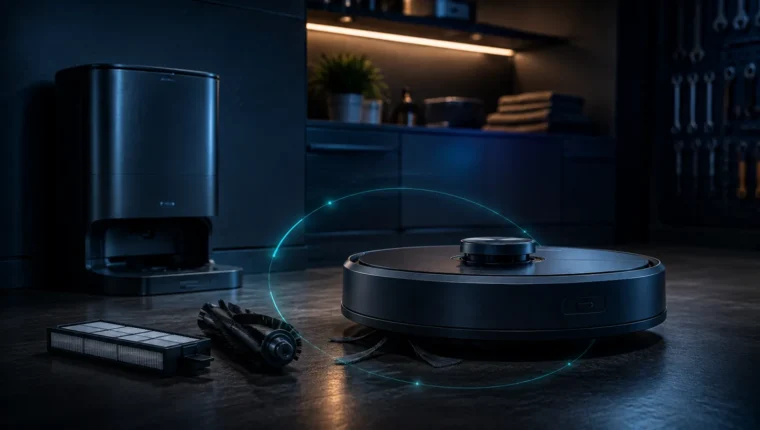
Battery, rollers, wheel modules, filters, charging contacts, sensors, dock components

This profile is an editorial summary of sourced lifespan context, common service points, maintenance leverage and repairability. See the linked methodology and primary reference before treating any range as a guarantee.

How to interpret this lifespan estimate

The European Environment Agency reports that robot vacuum cleaners in its European appliance lifespan data were used for roughly five and a half years on average (2023). This observational average is not the same as an expected failure date and does not independently establish the endpoints of Owngevity’s editorial range. Country, model, repair and replacement behavior may differ.

Read the underlying external reference

Evidence context and verification of Owngevity’s own range are separate. See our methodology.
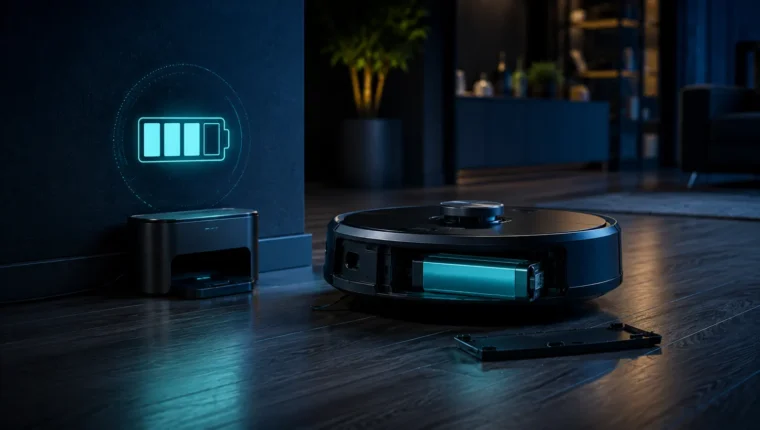
High-impact maintenance

  • Clean filters and rollers on the model's schedule.
  • Remove hair from axles, end caps and casters.
  • Keep charging contacts clean.
  • Wipe sensors using the recommended method.
  • Replace wear parts before poor airflow or friction overloads the system.

When replacement may make sense

  • Main electronics plus multiple wear modules have failed.
  • Essential app/cloud functionality is lost with no local fallback.
  • Replacement battery or wheel modules are unavailable.
  • Dock and robot both require major repairs.