OWNGEVITYMake what you own last longer.
OWNGEVITY PRODUCT PROFILE
Appliances

Washing Machine

Washers have a solid category lifespan and many common faults are repairable. Their score is helped by meaningful owner maintenance and widespread parts support, but heavily loaded bearings, tubs and electronics can make late-life repairs expensive.

OWNGEVITY SCORE8.1/10
Typical lifespan
About 10 years (broader studies roughly 5–15)
Repairability
Good
Maintenance impact
High
Parts availability
Good on major brands

Editorial score combining published lifespan ranges, common repair paths, owner maintenance leverage and parts availability.

Durability8.2
Reliability7.8
Repairability8.3
SCORE CONTEXT

Why this score?

Washers have a solid category lifespan and many common faults are repairable. Their score is helped by meaningful owner maintenance and widespread parts support, but heavily loaded bearings, tubs and electronics can make late-life repairs expensive.

Washers have a solid category lifespan and many common faults are repairable. Their score is helped by meaningful owner maintenance and widespread parts support, but heavily loaded bearings, tubs and electronics can make late-life repairs expensive.

What commonly determines lifespan

Drain pump, door lock, hoses, suspension, heater, bearings, controls

This profile is an editorial summary of sourced lifespan context, common service points, maintenance leverage and repairability. See the linked methodology and primary reference before treating any range as a guarantee.
High-impact maintenance

  • Keep the machine level and stable.
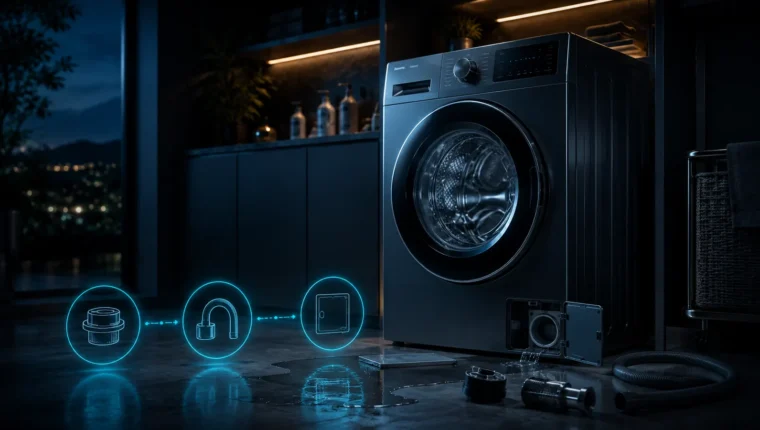
  • Clean owner-serviceable drain filters.
  • Inspect door seals and hoses.
  • Use detergent appropriate to load and water hardness.
  • Investigate new vibration or bearing noise early.

When replacement may make sense

  • Major bearing or tub work on an old low-value machine.
  • Repeated unrelated faults in a short period.
  • Structural corrosion or persistent leaks.
  • Important parts are no longer available.